Mustard-Roasted Cabbage Steaks
Roasting destroys cabbage's sulforaphane-making enzyme; whole-grain mustard adds it back. A caramelized cabbage steak built around the one kitchen trick the sulforaphane literature actually supports.
- Mechanism
- Nrf2 pathway
- Cited studies
- 5
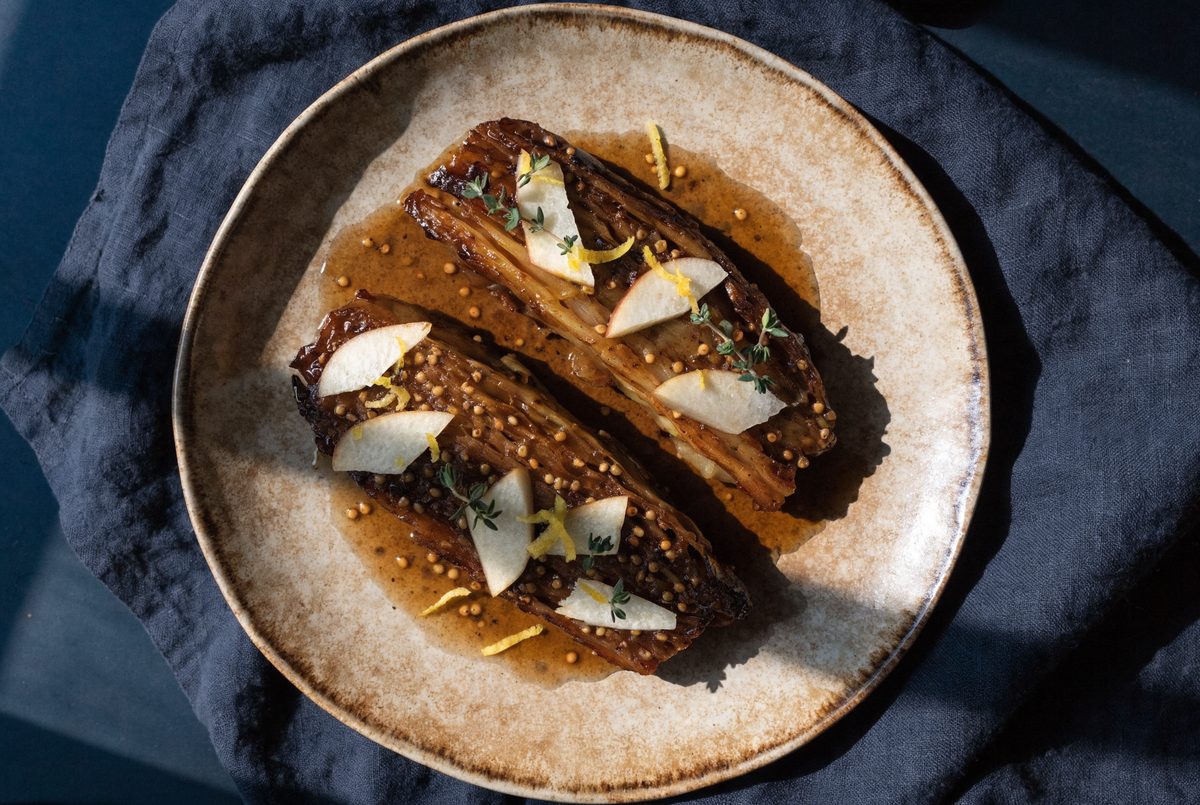
Cabbage is the least glamorous cruciferous vegetable, but it runs on the same chemistry that made broccoli famous: a stored precursor called glucoraphanin that converts to sulforaphane, the compound identified at Johns Hopkins as a major inducer of the body's own protective enzymes (Proceedings of the National Academy of Sciences, 1992). Follow-up work showing that broccoli sprouts are an exceptionally rich source of these inducers (Proceedings of the National Academy of Sciences, 1997) launched two decades of research on the Nrf2 pathway — nearly all of it in cells, animals, and small biomarker studies rather than trials with hard outcomes, which is worth remembering before crediting any vegetable with slowing aging.
The practical problem is heat. Myrosinase, the enzyme that actually makes sulforaphane when plant tissue is damaged, is destroyed by cooking, so roasted cabbage on its own yields relatively little. Mustard seed carries an unusually heat-tolerant myrosinase of its own, and in a crossover study in healthy adults, adding powdered mustard seed to cooked broccoli increased sulforaphane absorption roughly four-fold (Molecular Nutrition and Food Research, 2018). That trial measured urinary metabolites, not health outcomes — a real mechanistic fix, an unproven clinical one.
Why this works
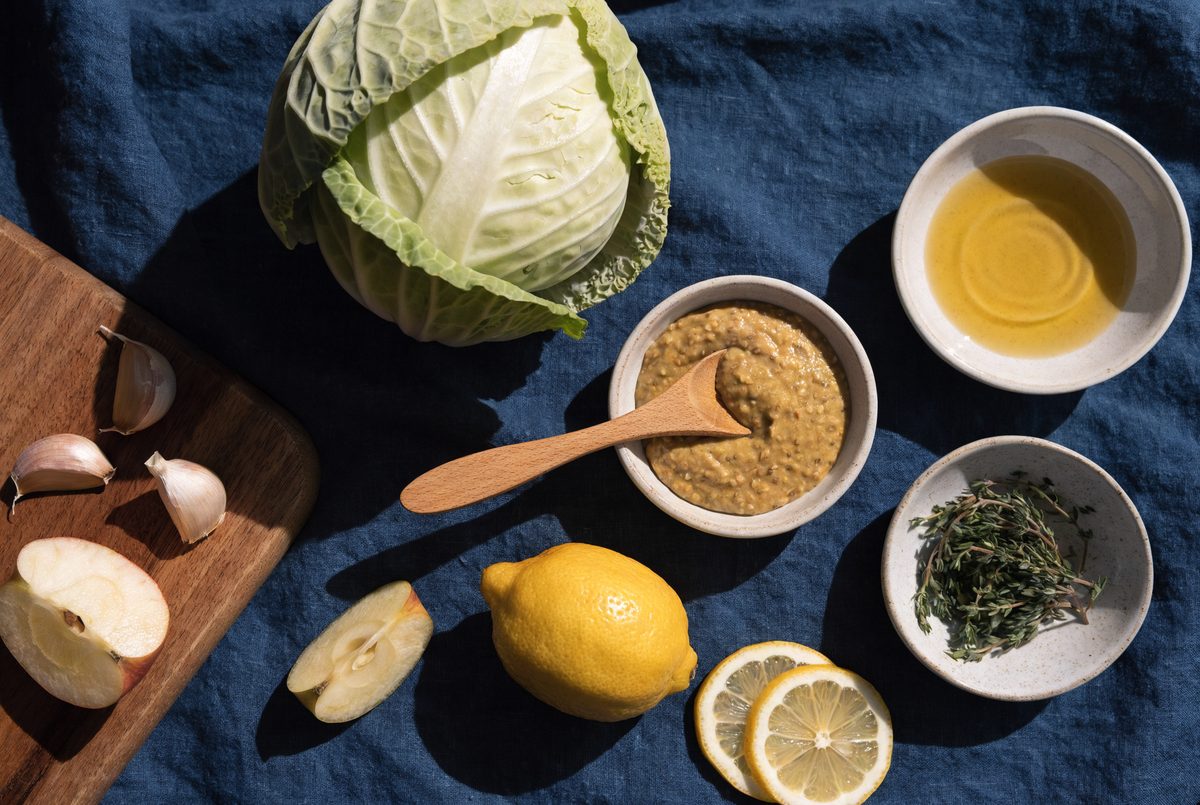
Green cabbage supplies the glucoraphanin substrate, and cutting it into thick steaks maximizes caramelized surface without collapsing it. Whole-grain mustard, brushed on partway through roasting and again off the heat, contributes intact mustard-seed myrosinase to convert what the oven would otherwise waste. Apples, shaved raw over the top, add quercetin, which modestly lowered blood pressure in a meta-analysis of randomized trials (Journal of the American Heart Association, 2016). Extra-virgin olive oil brings hydroxytyrosol and related phenolics, which improved HDL and oxidation markers in the randomized EUROLIVE trial (Annals of Internal Medicine, 2006). Garlic, thyme, and lemon do the flavor work that makes a plate of cabbage something you cook twice.
How to make it
- Heat the oven to 220°C / 425°F. Slice a green cabbage through the core into 2.5 cm steaks; the core keeps them intact.
- Brush both sides with olive oil, season with salt, and roast on a lined tray for 20 minutes.
- Whisk 3 tablespoons whole-grain mustard with 2 tablespoons olive oil, 2 grated garlic cloves, a teaspoon of thyme leaves, and a squeeze of lemon.
- Flip the steaks, brush with half the glaze, and roast 12–15 minutes more until the edges are deeply browned.
- Off the heat, brush with the remaining glaze so some mustard enzyme goes on unheated.
- Shave thin matchsticks of apple over the top and finish with lemon zest, thyme, and a thread of olive oil.
Serves 4 as a side or 2 as a vegetarian main; good warm or at room temperature.
19 PubMed citations
Human trials indicate that concentrated broccoli-sprout sulforaphane can modestly lower fasting blood glucose and…
25 PubMed citations
Meta-analyses of randomized trials indicate quercetin produces a small blood-pressure reduction—on the order of 2–3…
19 PubMed citations
In human trials, standardized olive leaf extract has most consistently produced modest reductions in systolic and…
The research behind this recipe
Primary sources for the claims above. Effects reported in these papers describe the compound or the dietary pattern studied — not this specific dish.
More antioxidant defence & polyphenols recipes
 Nrf2 pathway
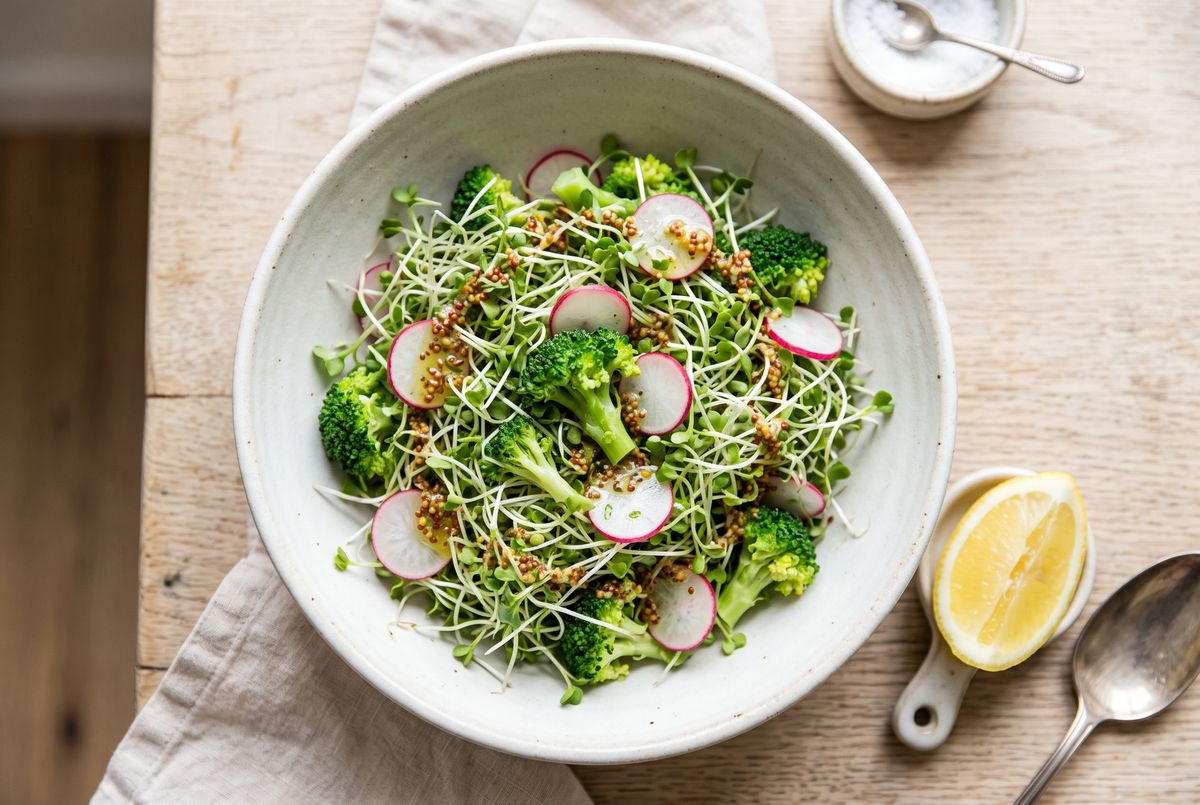
Broccoli sprouts carry many times the sulforaphane precursor of mature broccoli — and a little mustard restores the enzyme that…
 Polyphenols
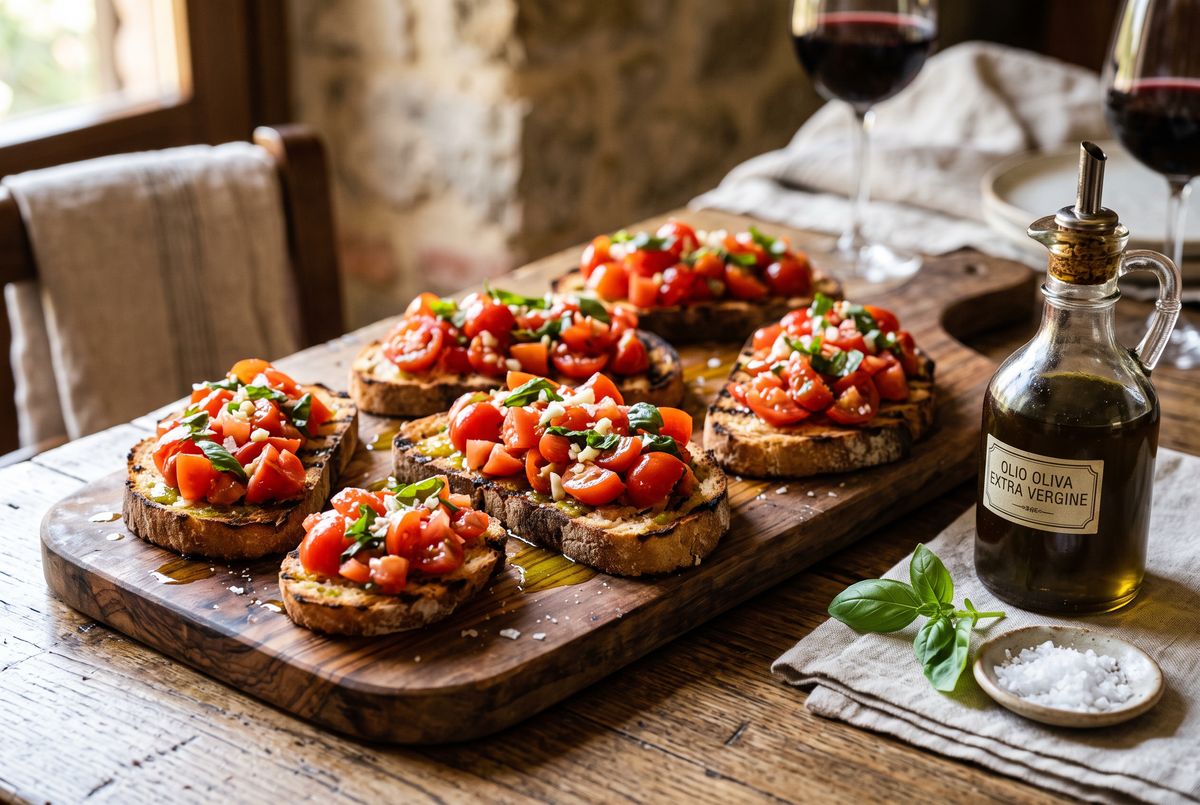
The peppery bite at the back of a good extra-virgin olive oil is the polyphenol content announcing itself — and this is the dish…
 Mushrooms
Mushrooms are effectively the only meaningful dietary source of ergothioneine, an amino acid your body has a dedicated…
Keep reading
Blood pressureNrf2SulforaphaneQuercetinSulforaphane: the evidenceSulforaphane and Nrf2The supplement guideResearch mapPathway universe