Clam & Miso Soup with Wakame
A 20-minute Japanese classic that pairs taurine-rich clams with unpasteurized miso — stirred in off the heat so its live cultures survive the pot.
- Mechanism
- Taurine
- Cited studies
- 3
- Course
- Soup
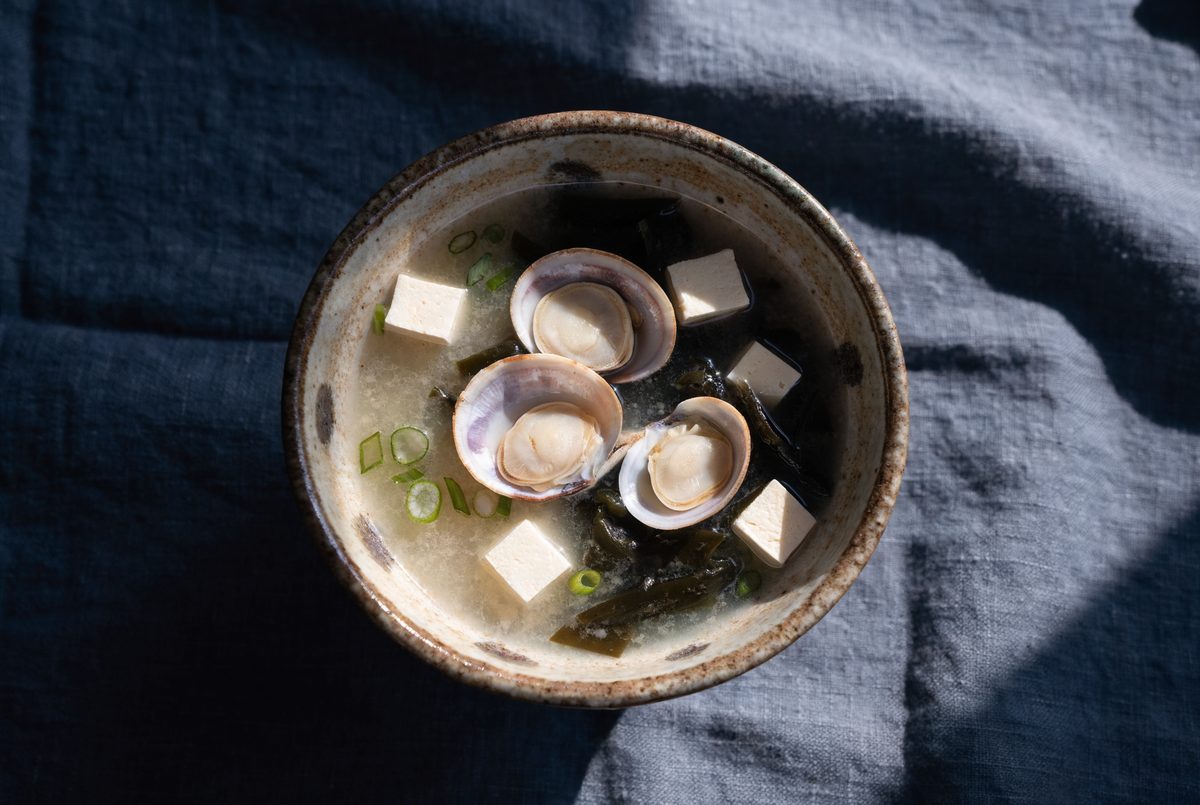
Clams are among the most taurine-dense foods you can buy, and it is hard not to notice that the world's longest-lived populations eat a lot of them. The paper that made taurine a longevity headline (Science, 2023) found blood taurine falling with age across species and showed that supplementation extended median lifespan in mice and improved health measures in middle-aged monkeys; its human data were purely associative. Japan's traditional diet — shellfish, seaweed, fermented soy — happens to be built around the foods that keep taurine intake high, which proves nothing on its own but makes this soup a reasonable habit rather than a leap.
The miso brings the second line of evidence. In a 17-week randomized study of 36 adults (Cell, 2021), a diet high in fermented foods increased gut microbiome diversity and lowered 19 markers of inflammation, outperforming a high-fiber arm on those measures. Small and short, but it is one of the few randomized fermented-food studies with immune outcomes, and it is the reason this recipe insists on unpasteurized miso added off the heat — boiling kills the live cultures the study was feeding people. Clams also carry meaningful zinc, whose role in immune cell function is well characterized mechanistically (Molecular Medicine, 2008), if not through food-level outcome trials.
Why this works
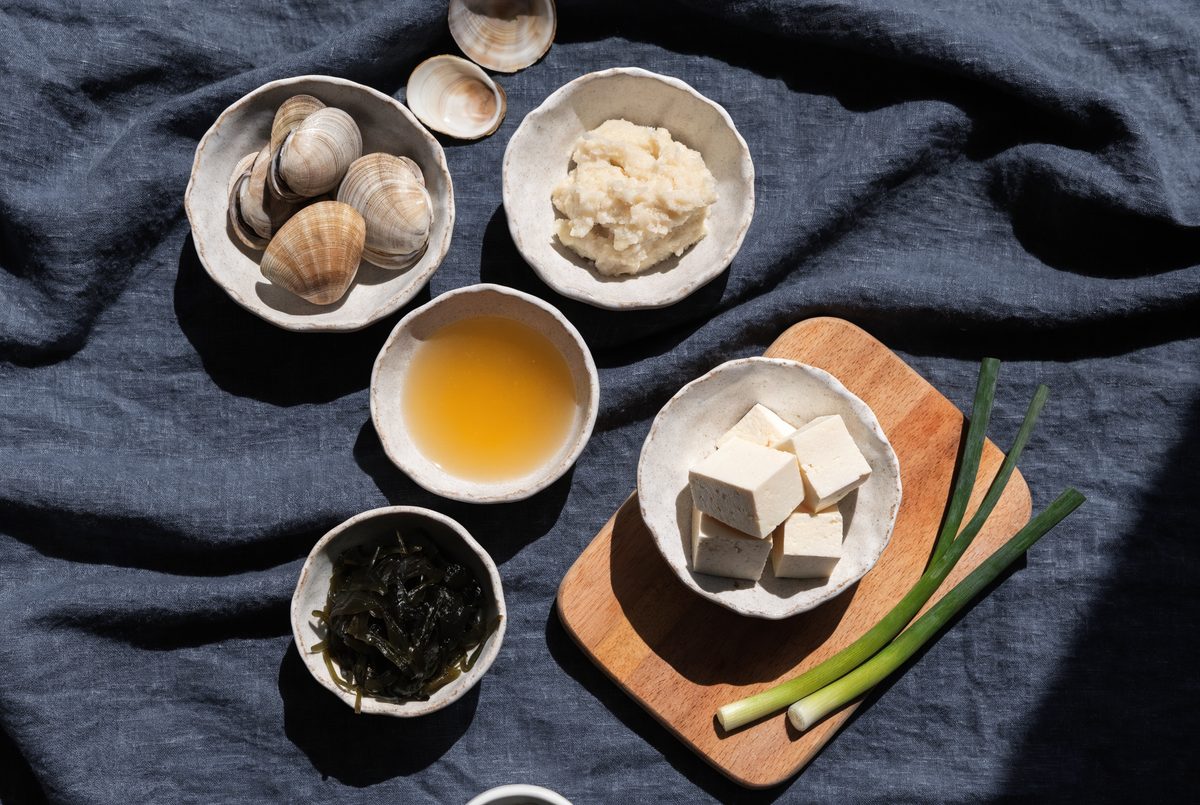
Littleneck clams supply taurine, zinc, iron, and B12 in a package with almost no calories. Kombu dashi delivers glutamate depth so the soup needs less salt than its flavor suggests. White miso, unpasteurized and stirred in last, contributes live ferments plus its own soy peptides. Wakame adds minerals and body, silken tofu adds gentle protein, and scallions finish it the way every miso soup should be finished. Nothing here takes real technique — the whole dish is a timer and a whisk.
How to make it
- Soak a palm-sized piece of kombu in 1 liter of cold water for 20 minutes, then bring it to just below a simmer and remove the kombu.
- Add 500 g of scrubbed, purged littleneck clams, cover, and cook 4–6 minutes until they open; discard any that refuse.
- Meanwhile, soak a tablespoon of dried wakame in cold water for 5 minutes and drain.
- Add the wakame and 150 g of cubed silken tofu to the pot and heat through gently.
- Take the pot off the heat. Ladle a little broth into a bowl, whisk in 3 tablespoons of white miso until smooth, and stir it back in. Do not boil the soup again.
- Serve scattered with sliced scallions.
Serves 2. If reheating leftovers, keep it below a simmer for the same reason you added the miso off the heat.
19 PubMed citations
A landmark 2023 study reported that taurine declines with age in mice, monkeys, and humans and that supplementation…
23 PubMed citations
Multiple meta-analyses of randomized trials indicate that oral zinc, started soon after symptom onset, can modestly…
The research behind this recipe
Primary sources for the claims above. Effects reported in these papers describe the compound or the dietary pattern studied — not this specific dish.
More muscle, connective tissue & minerals recipes
 Muscle & strength
Red meat and fish are the only meaningful dietary sources of creatine — roughly a gram per pound of raw meat, and cooking costs…
 Collagen & glycine
Gelatin is roughly a third glycine — the amino acid we eat least of relative to how much our connective tissue needs.
 Taurine
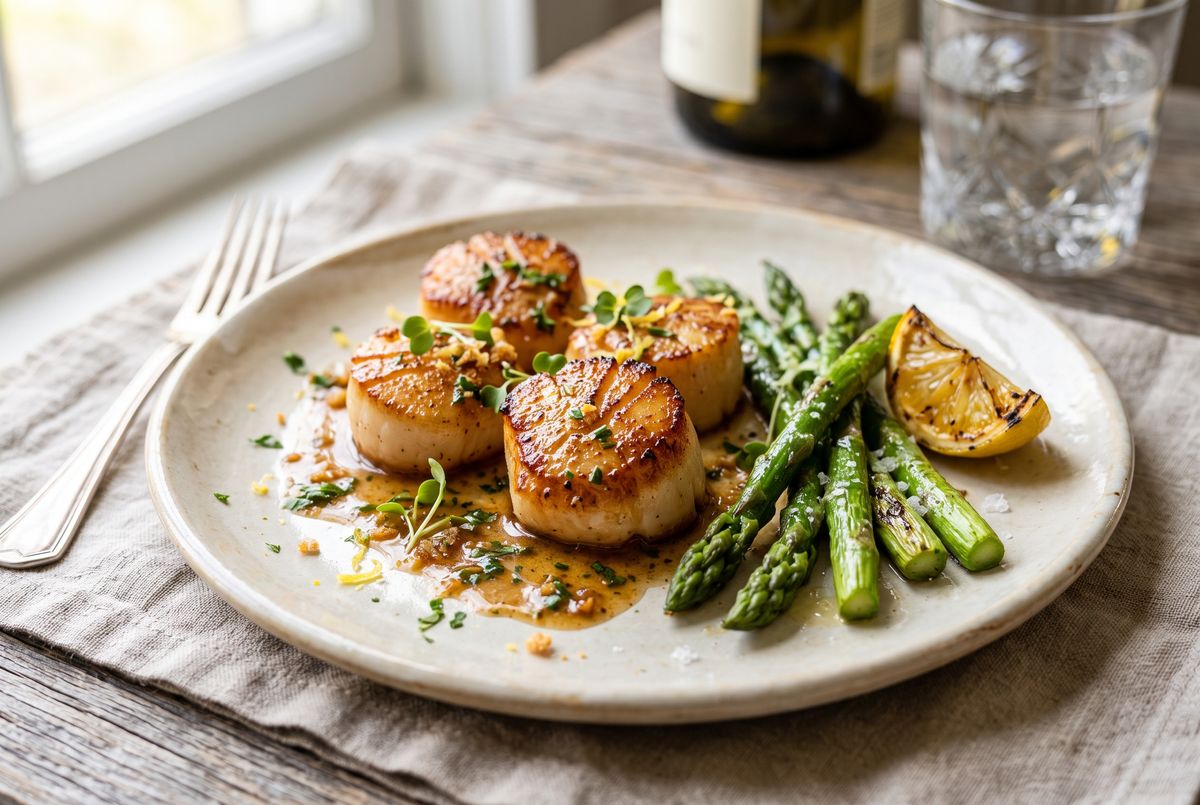
Shellfish are the densest food source of taurine — the amino acid whose age-related decline drew serious attention in 2023.
Keep reading
The microbiomeDietary fiberTaurine and AgingThe supplement guideResearch mapPathway universe