Crab Cakes with Citrus–Cabbage Slaw
Crab is one of the densest food sources of zinc and taurine — one immune-relevant, one at the center of a live aging debate — while an orange-and-cabbage slaw adds hesperidin and sulforaphane precursors.
- Mechanism
- Zinc & immunity
- Cited studies
- 5
- Course
- Salad
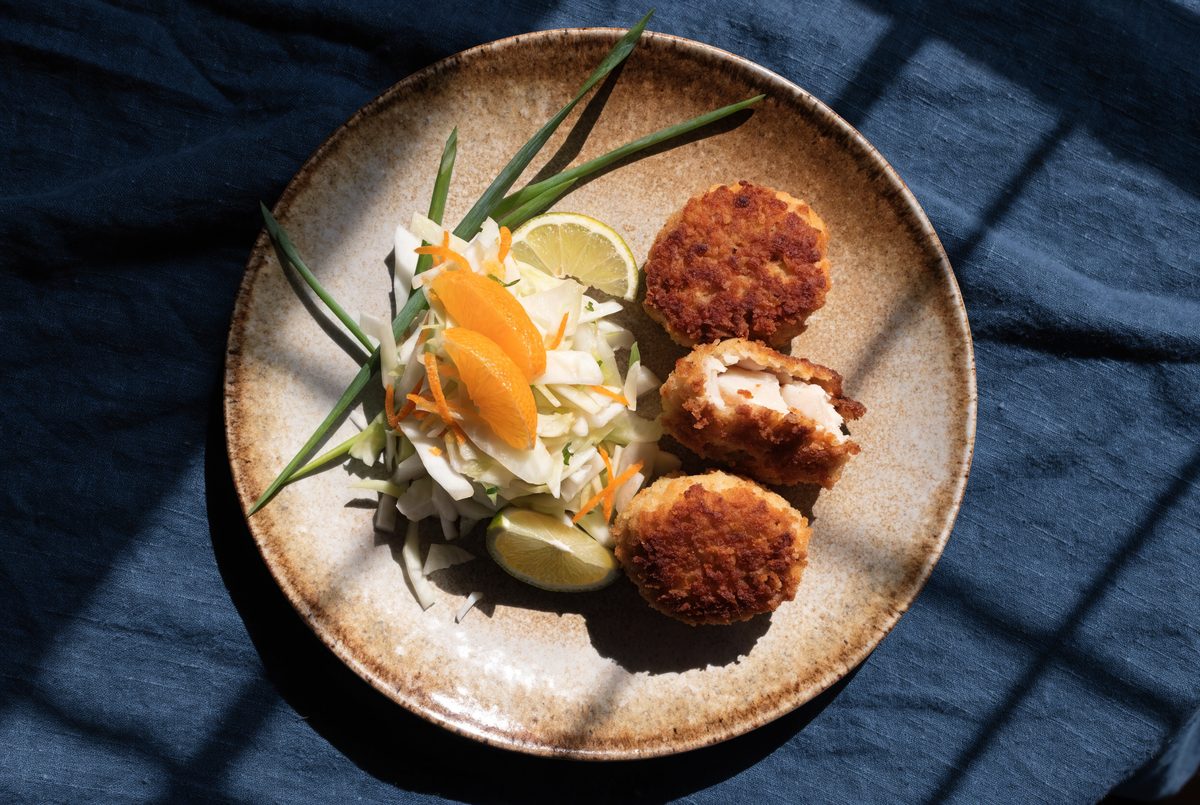
After oysters, crab is about as zinc-dense as ordinary food gets, and zinc is one of the few micronutrients with genuinely interventional immune evidence. Reviews describe it as a gatekeeper of immune function, with deficiency impairing both innate and adaptive responses (Nutrients, 2017), and a meta-analysis of randomized trials found zinc — taken early — shortened the duration of common colds (CMAJ, 2012). The honest footnote: those trials used lozenges and syrups at supplemental doses, not crab cakes, and the benefit came with metallic-taste complaints.
Crab and other shellfish are also among the richest sources of taurine, which currently sits at the center of one of the livelier arguments in aging science. A high-profile paper reported that taurine declines with age and that supplementation extended lifespan in mice and improved health markers in monkeys (Science, 2023); a follow-up analysis in humans then pushed back, finding taurine levels did not consistently decline with age and questioning the deficiency framing (Aging Cell, 2025). Meanwhile the slaw earns its keep: in a randomized crossover trial, orange juice and its main flavanone hesperidin improved endothelial function in healthy volunteers (American Journal of Clinical Nutrition, 2011).
Why this works
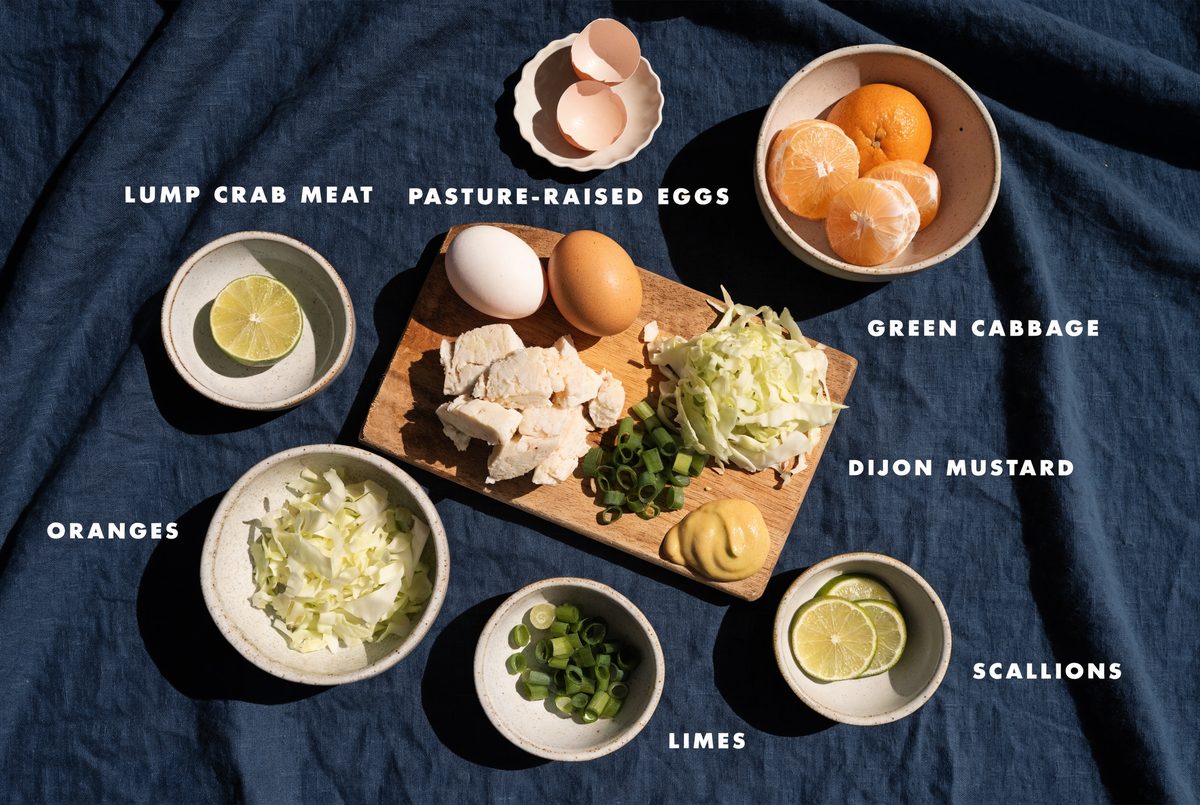
Lump crab meat carries the zinc and the taurine, and needs almost nothing done to it — the recipe's job is to not bury it in filler. Pasture-raised eggs and a little panko bind the cakes while keeping the crab-to-binder ratio high. Oranges bring hesperidin, which lives largely in the pith and membranes, so segments beat juice here. Raw green cabbage contributes glucosinolates, the precursors your knife work converts toward sulforaphane. Lime, scallions and Dijon handle brightness and backbone.
How to make it
- Pick through 450 g lump crab meat for shell. In a bowl, whisk 1 egg with 1 tbsp Dijon mustard, 2 sliced scallions and a pinch of cayenne.
- Fold in the crab and 40 g panko with a light hand, keeping the lumps intact. Shape into 6 cakes and chill 30 minutes — this is what holds them together.
- Meanwhile, shave a quarter of a green cabbage very thin, cut 2 oranges into segments, and toss both with lime juice, a pinch of salt and 1 tsp olive oil.
- Sear the cakes in a thin layer of oil over medium-high heat, 3–4 minutes per side, until deeply golden.
- Rest the cakes 2 minutes, then plate over the slaw with lime wedges.
Serves 3, two cakes each. The slaw softens fast once dressed, so toss it while the cakes sear, not before.
23 PubMed citations
Multiple meta-analyses of randomized trials indicate that oral zinc, started soon after symptom onset, can modestly…
19 PubMed citations
A landmark 2023 study reported that taurine declines with age in mice, monkeys, and humans and that supplementation…
22 PubMed citations
In human trials, hesperidin or hesperidin-rich orange juice has improved endothelial function and postprandial…
The research behind this recipe
Primary sources for the claims above. Effects reported in these papers describe the compound or the dietary pattern studied — not this specific dish.
More muscle, connective tissue & minerals recipes
 Muscle & strength
Red meat and fish are the only meaningful dietary sources of creatine — roughly a gram per pound of raw meat, and cooking costs…
 Collagen & glycine
Gelatin is roughly a third glycine — the amino acid we eat least of relative to how much our connective tissue needs.
 Taurine
Shellfish are the densest food source of taurine — the amino acid whose age-related decline drew serious attention in 2023.
Keep reading
The endotheliumSulforaphaneSulforaphane: the evidenceTaurine and AgingThe supplement guideResearch mapPathway universe