Harissa Lamb & Chickpea Tagine
Lamb and chickpeas cover zinc and fermentable fiber — the latter backed by the Lancet's landmark fiber series — while harissa, turmeric and garlic do the flavor lifting in a slow, brick-red braise.
- Mechanism
- Zinc & immunity
- Cited studies
- 4
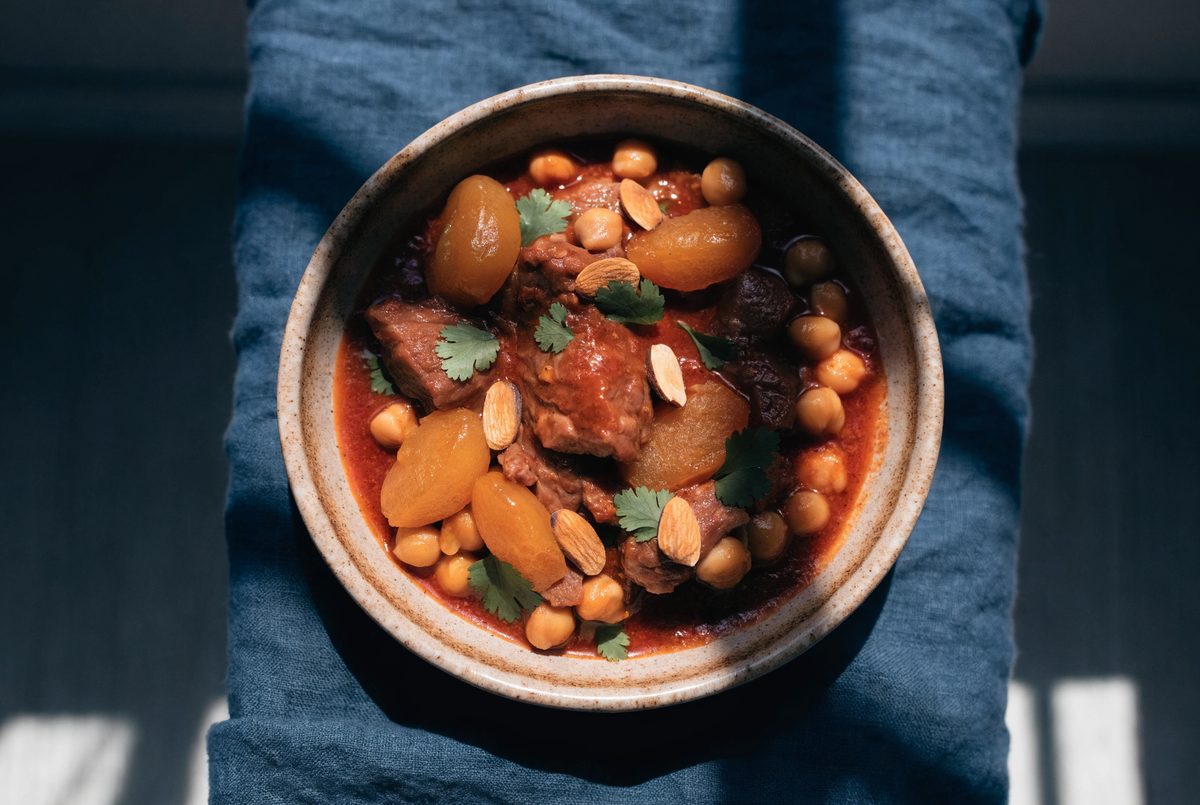
Lamb is one of the most reliable dietary zinc sources, and the zinc in red meat is absorbed considerably better than the zinc in grains and legumes, where phytates get in the way. Why care? Zinc deficiency measurably impairs immune cell function — the foundational work on human zinc deficiency and immunity laid this out decades ago (Molecular Medicine, 2008) — and older adults are among the groups most likely to run low. None of which makes lamb a supplement; it makes it a dense, bioavailable food source, which is usually the better deal anyway.
The chickpeas may quietly be the healthiest thing in the pot. The Lancet's landmark series of systematic reviews and meta-analyses on carbohydrate quality found that people eating the most fiber — with legumes among the best-performing sources — had 15 to 30 percent reductions in all-cause mortality, coronary heart disease and type 2 diabetes incidence (Lancet, 2019), with supporting randomized-trial data on weight and cholesterol. The spices ride along with weaker but real literatures: black pepper's piperine boosts absorption of turmeric's curcumin roughly twenty-fold (Planta Medica, 1998), and garlic preparations lower blood pressure in hypertensive adults in meta-analysis (Journal of Nutrition, 2016) — both findings from doses well above what one serving of tagine provides.
Why this works
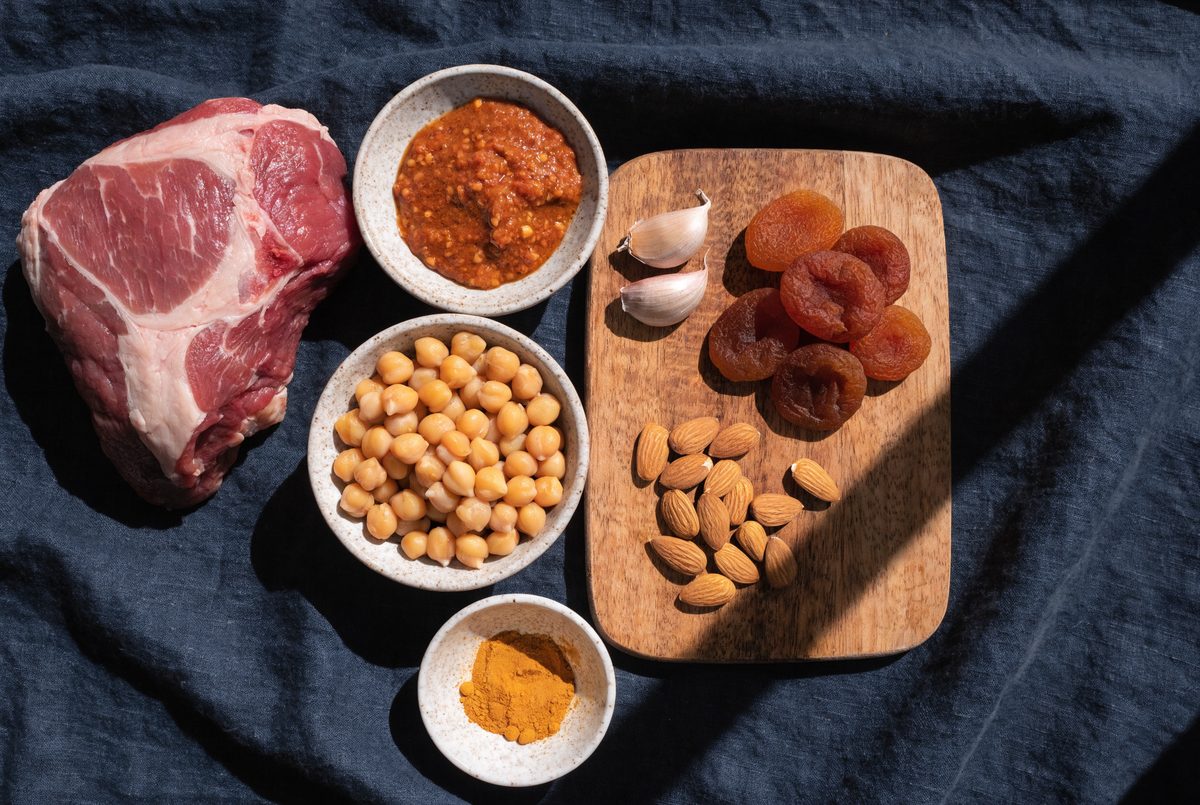
Lamb shoulder brings the zinc plus the collagen that a two-hour braise converts into body. Chickpeas supply the fermentable fiber your gut bacteria actually use, alongside plant protein. Turmeric plus the black pepper already in the pot covers the curcumin-piperine pairing; garlic, crushed and rested before it is fried, brings the allicin. Harissa and dried apricots pull the dish between heat and sweetness, and almonds finish it with crunch and a little extra magnesium.
How to make it
- Season 700 g cubed lamb shoulder with salt and brown it in batches in olive oil in a heavy pot; set aside.
- Crush 4 garlic cloves and rest them 10 minutes. Soften 1 diced onion in the same pot, then add the garlic, 2 tbsp harissa, 1 tsp ground turmeric, ½ tsp black pepper and 1 tsp cumin; fry 2 minutes until fragrant.
- Return the lamb with 400 g cooked chickpeas, 8 halved dried apricots and 500 ml water; scrape up the fond.
- Cover and braise at a bare simmer (or 160°C oven) for about 2 hours, until the lamb yields to a spoon.
- Uncover for the last 20 minutes to thicken the sauce; season to taste.
- Serve scattered with toasted almonds and cilantro.
Serves 4–6, ideally with flatbread or couscous. Like most braises it improves overnight as the spices settle in.
23 PubMed citations
Multiple meta-analyses of randomized trials indicate that oral zinc, started soon after symptom onset, can modestly…
21 PubMed citations
Randomized trials and meta-analyses indicate that inulin-type fructans reliably increase stool frequency and improve…
24 PubMed citations
Meta-analyses of randomized controlled trials generally find that curcumin/turmeric supplementation lowers CRP, IL-6…
The research behind this recipe
Primary sources for the claims above. Effects reported in these papers describe the compound or the dietary pattern studied — not this specific dish.
More muscle, connective tissue & minerals recipes
 Muscle & strength
Red meat and fish are the only meaningful dietary sources of creatine — roughly a gram per pound of raw meat, and cooking costs…
 Collagen & glycine
Gelatin is roughly a third glycine — the amino acid we eat least of relative to how much our connective tissue needs.
 Taurine
Shellfish are the densest food source of taurine — the amino acid whose age-related decline drew serious attention in 2023.
Keep reading
Blood pressureCollagenInulinDietary fiberThe supplement guideResearch mapPathway universe