Zinc-Rich Oysters with Mignonette
No food comes close to oysters for zinc — a few of them cover a day's requirement several times over.
- Mechanism
- Zinc & immunity
- Yield
- serves 2
- Ingredients
- 4
- Steps
- 4
- Cited studies
- 3
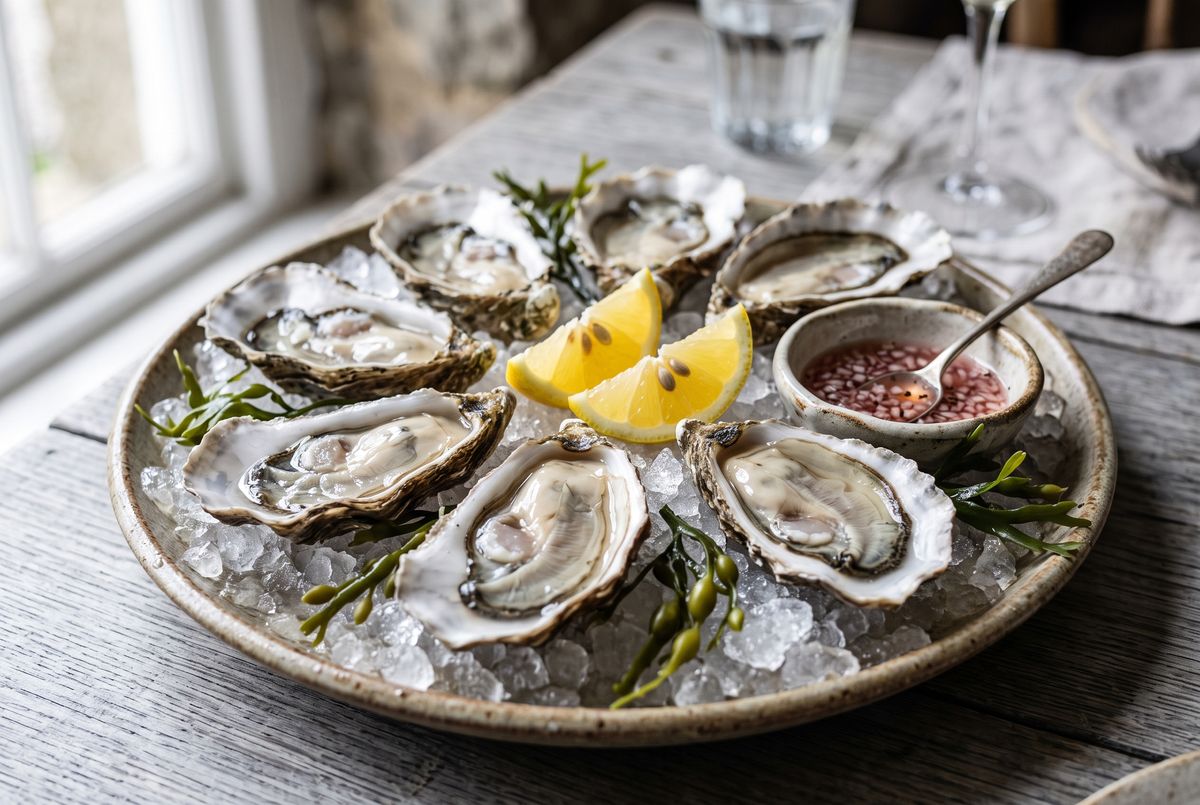
Oysters are the most zinc-dense food that has been measured, with lean red meat the next best animal source. Zinc is needed for immune function, and its status has been reviewed in the context of aging. Shellfish also contribute taurine.
Absorption is the other half of the story. Zinc from animal foods is taken up more readily than zinc from plants, because phytate in grains and legumes binds the mineral — a point examined in a scoping review of animal-source foods and micronutrient absorption (Advances in Nutrition, 2022) and in earlier human feeding work on a beef-based diet (Journal of the American Dietetic Association, 1992). A review of seafood (International Journal for Vitamin and Nutrition Research, 2012) sets the nutritional benefits alongside the risks, and with raw oysters the risk is infection.
Why this works
A dozen oysters is the whole nutritional point here — the zinc, and the taurine that comes with shellfish, are in the oyster itself, so everything else on the plate is in service of eating them cold, raw and in good condition. Shucking over a bowl saves the liquor, so each one sits in its own seawater instead of drying in the shell. The mignonette of minced shallot, red wine vinegar and cracked pepper wants fifteen minutes of standing time before it meets the ice, which takes the raw heat out of the shallot and leaves clean acid behind. Lemon does the same job in a brighter register, and crushed ice is not decoration: cold keeps raw shellfish both safe and firm.
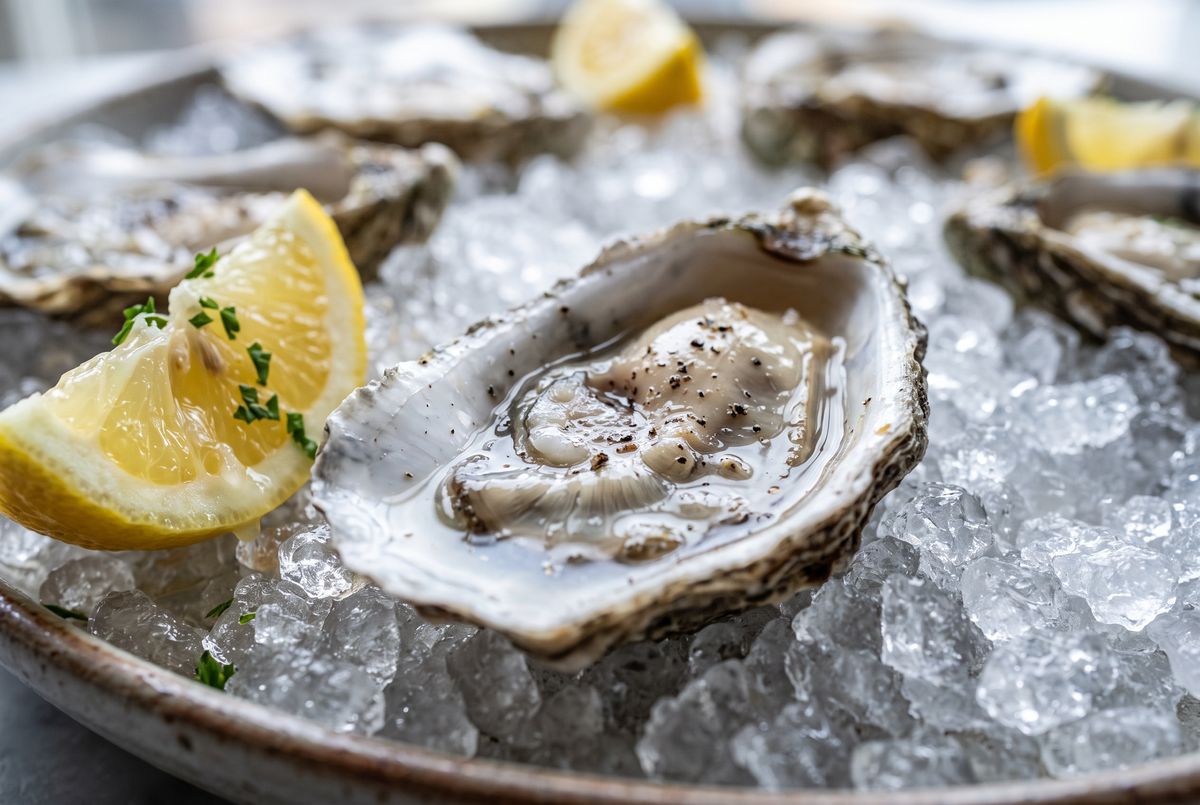
Ingredients · serves 2
- 12 fresh oysters, scrubbed
- Mignonette: 1 small shallot, minced, 3 tbsp red wine vinegar, ½ tsp cracked black pepper
- Lemon wedges
- Crushed ice, to serve
Method
- Make the mignonette first and let it sit at least 15 minutes so the shallot mellows.
- Chill the oysters thoroughly. Shuck over a bowl to catch the liquor, working the knife into the hinge and twisting rather than forcing.
- Loosen each oyster from its shell but leave it sitting in its own liquor.
- Serve immediately on crushed ice with the mignonette and lemon.
Getting the most from it
Buy oysters live, from a shop that turns over stock quickly, and keep them cold and cup-side down until you shuck. Discard any that gape and will not close. Raw shellfish is not for everyone: if you are pregnant, immunocompromised or living with liver disease, eat them cooked instead, where the same zinc survives the heat. And leave zinc supplements alone unless a clinician advises otherwise, since high doses block copper absorption.
Nutrition Facts
Calculated for one serving from USDA FoodData Central values for the ingredients above. An estimate, not a lab analysis.
How this was calculated. Each ingredient was converted to grams, matched to a food in USDA FoodData Central (SR Legacy, April 2018), summed, and divided by 2 servings. Cooking losses, draining and the real size of a handful all move these numbers, so treat them as a good estimate rather than a measurement. Added sugars count honey, maple syrup and table sugar only; sugar from whole fruit is not an added sugar.
- Mollusks, oyster, eastern, wild, raw
- Shallots, raw
- Vinegar, red wine
- Spices, pepper, black
23 PubMed citations
Multiple meta-analyses of randomized trials indicate that oral zinc, started soon after symptom onset, can modestly…
19 PubMed citations
A landmark 2023 study reported that taurine declines with age in mice, monkeys, and humans and that supplementation…
22 PubMed citations
Across large randomized trials and meta-analyses, marine omega-3s reliably reduce serum triglycerides (roughly 15% at…
The research behind this recipe
Primary sources for the claims above. Effects reported in these papers describe the compound or the dietary pattern studied — not this specific dish.
More muscle, connective tissue & minerals recipes
 Muscle & strength
Red meat and fish are the only meaningful dietary sources of creatine — roughly a gram per pound of raw meat, and cooking costs…
 Collagen & glycine
Gelatin is roughly a third glycine — the amino acid we eat least of relative to how much our connective tissue needs.
 Taurine
Shellfish are the densest food source of taurine — the amino acid whose age-related decline drew serious attention in 2023.
Keep reading
Omega-3Omega-3: the evidenceTaurine and AgingThe supplement guideResearch mapPathway universe