Which therapeutic strategies can slow biological aging and reduce the burden of age-related diseases — and how close are they to the clinic?
Insights into the therapeutic strategies (Signal Transduction and Targeted Therapy 2026, PMID 42225652) — senolytics that eliminate senescent cells (e.g., dasatinib + quercetin), senomorphics that suppress the senescence-associated secretory phenotype (e.g., rapamycin), and senoreversion that rejuvenates cells via epigenetic reprogramming. No numeric effect size is reported for Insights into the therapeutic strategies in the source abstract.
Source: Signal Transduction and Targeted Therapy 2026, PMID 42225652 ↗ · Research map · How Magellan grades evidence · evidence confidence: low
Signal Transduction and Targeted Therapy · 2026 · PMID 42225652 · DOI 10.1038/s41392-026-02662-z
A 2026 map of the longevity-therapeutics field: senolytics, senomorphics, senoreversion and caloric-restriction mimetics are the leading strategies, with AI accelerating discovery — but human proof remains the gating step.
The question
Which therapeutic strategies can slow biological aging and reduce the burden of age-related diseases — and how close are they to the clinic?
What they tested
Interventions that target the core hallmarks of aging — cellular senescence, metabolic dysfunction, epigenetic alterations and mitochondrial impairment — can delay aging and lower disease risk, moving medicine toward 'precision longevity.'
How they did it
A comprehensive review systematically summarizing current breakthroughs, clinical landscapes and future directions across the major classes of aging therapeutics, alongside the emerging role of artificial intelligence in discovery.
What they found
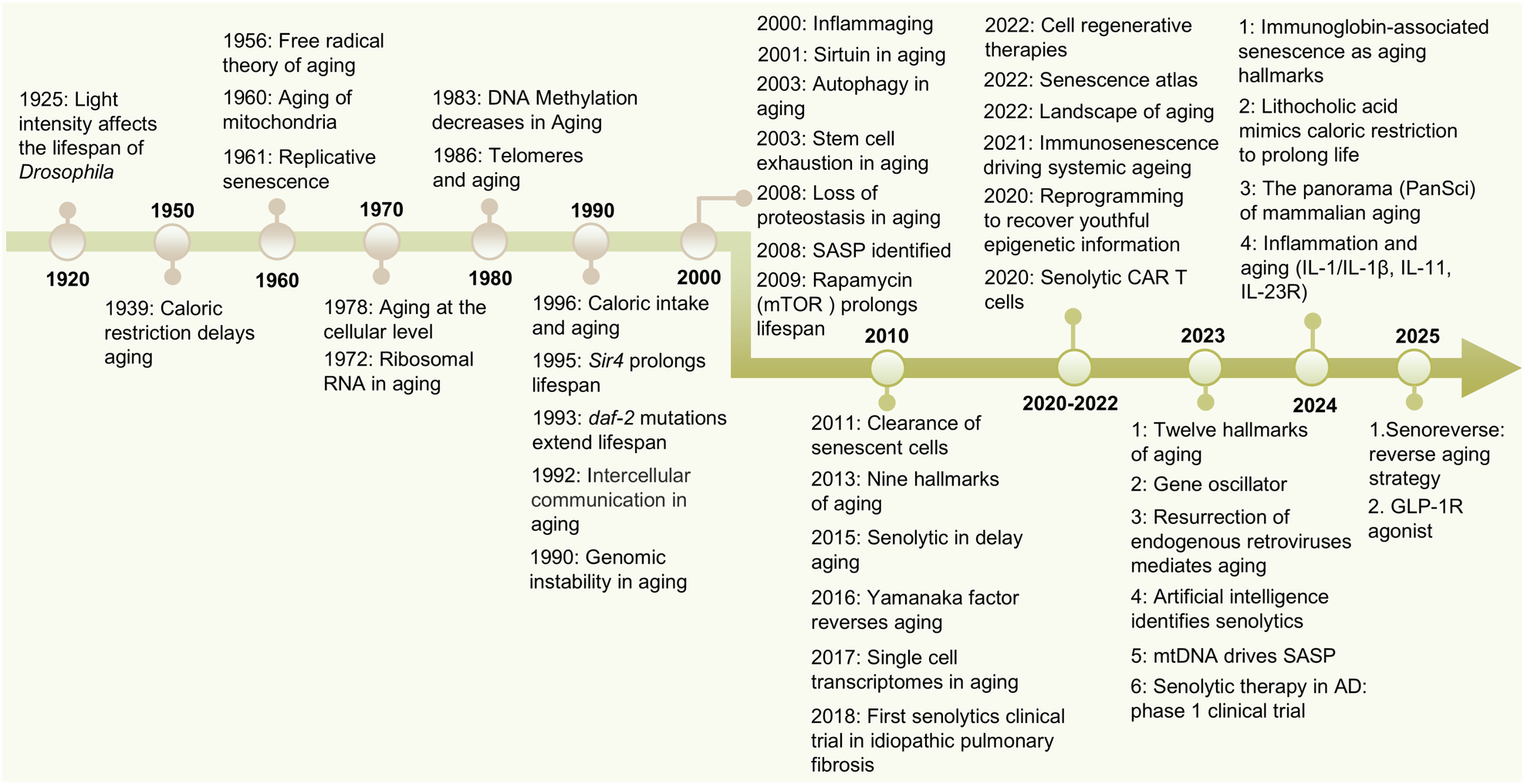
The authors group emerging interventions into three senescence-focused strategies — senolytics that eliminate senescent cells (e.g., dasatinib + quercetin), senomorphics that suppress the senescence-associated secretory phenotype (e.g., rapamycin), and senoreversion that rejuvenates cells via epigenetic reprogramming — plus metabolic approaches such as caloric-restriction mimetics (spermidine, α-ketoglutarate, ergothioneine) that enhance mitochondrial function, activate autophagy and extend lifespan and healthspan in preclinical models. AI is highlighted for integrating multiomics data, predicting candidate compounds, identifying biomarkers and personalizing interventions.
What it means
Targeting aging hallmarks holds real promise for delaying aging and alleviating age-related pathology, and the convergence of AI, multitarget strategies and precision medicine signals a transformative era for extending healthspan.
Limitations
This is a review of largely preclinical evidence. Key challenges remain in target specificity, off-target effects and clinical translation — most interventions are not yet proven to extend healthy lifespan in humans.
The paper at a glance
| Title | Insights into the therapeutic strategies for aging and aging-associated diseases |
|---|---|
| Journal | Signal Transduction and Targeted Therapy |
| Year | 2026 |
| PMID | 42225652 ↗ |
| DOI | 10.1038/s41392-026-02662-z ↗ |
| Topic | Senescence, senolytics & the hallmarks of aging |
Read the source: PubMed record (authors, abstract, full citation) ↗ · Publisher via doi.org ↗
Molecules & mechanisms in this paper
Each of these is named in the paper’s own words above. Open the monograph for the full mechanism and its other citations.
Cite this page
These citations point at this summary. To cite the original paper with its full author list, use the PubMed record or doi.org.
Magellan Longevity. (2026). Which therapeutic strategies can slow biological aging and reduce the burden of age-related diseases — and how close are they to the clinic? [Plain-English summary of Signal Transduction and Targeted Therapy 2026, PMID 42225652, DOI 10.1038/s41392-026-02662-z]. Magellan Longevity. https://magellanlongevity.com/study/aging_therapeutics_2026.html@misc{magellan_aging_therapeutics_2026,
title = {Which therapeutic strategies can slow biological aging and reduce the burden of age-related diseases — and how close are they to the clinic?},
author = {{Magellan Longevity}},
year = {2026},
howpublished = {\url{https://magellanlongevity.com/study/aging_therapeutics_2026.html}},
note = {Plain-English summary of PubMed PMID 42225652; DOI 10.1038/s41392-026-02662-z; Signal Transduction and Targeted Therapy 2026. Reviewed by Gabriel Radu, DO},
urldate = {2026-08-11}
}https://magellanlongevity.com/study/aging_therapeutics_2026.htmlRelated studies in the Magellan library
- Cardioprotection and lifespan extension by the natural polyamine spermidineNature Medicine · 2016 · PMID 27841876
- Does taurine deficiency contribute to aging, and can taurine supplementation improve health…Science · 2023 · PMID 37289866
- Induction of autophagy by spermidine promotes longevityNature Cell Biology · 2009 · PMID 19801973
- Senolytic drugs: from discovery to translationJ Intern Med · 2020 · PMID 32686219
- Hyperbaric oxygen therapy increases telomere length and decreases immunosenescence in isolated…Aging (Albany NY) · 2020 · PMID 33206062
- Higher spermidine intake is linked to lower mortalityThe American Journal of Clinical Nutrition · 2018 · PMID 29955838
All 8 Magellan summaries on senescence, senolytics & the hallmarks of aging →
Prefer the interactive version? Open this summary in the Magellan app → · Browse all 314 study summaries →