Continuous Glucose Monitors Went Over-the-Counter. Here's What They Can and Can't Tell You.
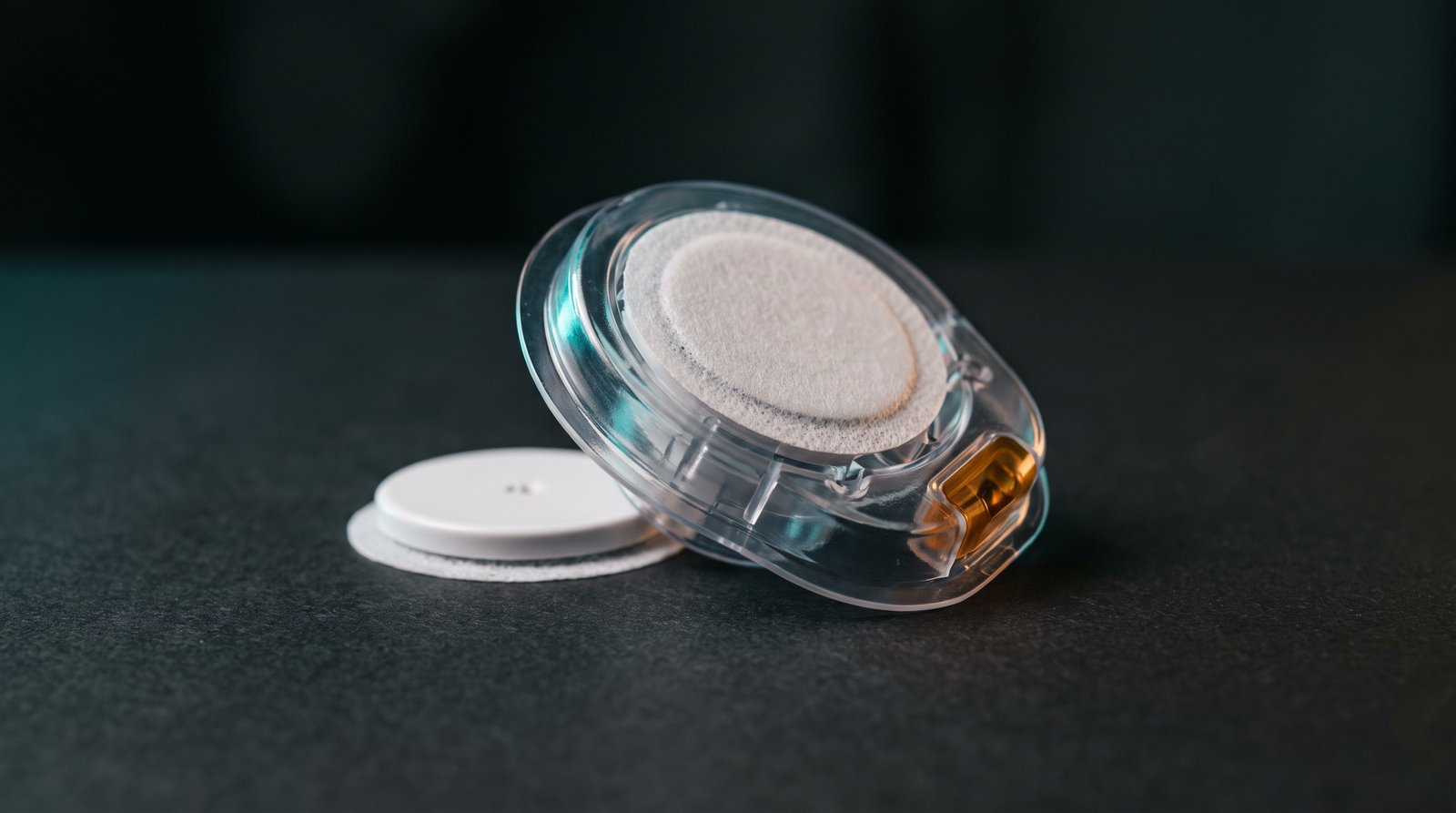
Dexcom Stelo over-the-counter glucose biosensor — Magellan evidence grade: Mixed — in the 2025 reference-interval study, time above 140 mg/dL was the best single metric for distinguishing prediabetes from normoglycaemia, and it reached an area under the curve of only 0.72. Skip the open-ended subscription and coaching upsell; the randomised trials that measured weight and BMI found nothing.
Source: J Clin Endocrinol Metab 2019, PMID 31127824 ↗ · FreeStyle Libre continuous glucose monitor · How Magellan grades evidence · Research map · evidence confidence: high
The sensors are accurate enough. The interpretation — spikes, variability, 'personalised nutrition' — is where the evidence gets thin.
The verdict
Reference intervals in healthy people are solid and replicated, but the largest reviews of glycaemic variability and of monitoring as a behaviour-change tool report mostly null results for the outcomes buyers care about.
How to read this grade: Magellan's evidence scale runs 4 = Strong (multiple consistent human studies), 3 = Mixed (human trials that disagree or support only part of the claim), 2 = Early (small, short or uncontrolled human studies), 1 = Preclinical only (animal or laboratory data with no human efficacy result). It grades the strength of the published evidence behind the claim, not the build quality, value or popularity of any product, and it is not a user rating. Grades are set independently of affiliate commissions. How we grade →
Who should buy
One or two sensors' worth of wear, used to test specific meals and post-meal walks against your own baseline.
Who should skip
Skip the open-ended subscription and coaching upsell; the randomised trials that measured weight and BMI found nothing.
The bottom line
The sensors are accurate and the reference ranges for people without diabetes are well described, but the meta-analyses find glucose variability is not clearly linked to most cardiometabolic markers and monitoring does not move weight or BMI. Wear one to answer a specific question, not as a subscription.
What to look for
| Checkpoint | What the evidence says |
|---|---|
| Watch percentage of the day above 140 mg/dL | In healthy adults the median was about 2 percent, roughly 30 minutes |
| Checkpoint 2 | Judge variability against a within-person coefficient of variation near 17 percent, not against a flat line |
| Checkpoint 3 | Over-the-counter sensors are cleared for adults 18 and over who do not use insulin, and not for problematic hypoglycaemia |
| Change one variable at a time and repeat it | Identical meals varied by 68 percent across a population |
The full story
In March 2024 the FDA cleared the Dexcom Stelo as the first over-the-counter continuous glucose monitor, for adults 18 and over who do not use insulin, explicitly including people without diabetes who want to see how diet and exercise affect their blood sugar. The clearance came with a limit worth reading twice: it is not for people with problematic hypoglycaemia, because the system is not designed to alert them to it.
So the access question is settled. You can buy one. The harder question is what the resulting graph means, and there the literature splits into two unequal piles: a solid one describing what glucose actually does in people without diabetes, and a thin one propping up the interpretive layer the apps sell on top.
What normal actually looks like
A 2019 multicentre prospective study in the Journal of Clinical Endocrinology and Metabolism put blinded sensors on 153 healthy non-diabetic people aged 7 to 80. Mean glucose was 98 to 99 mg/dL, rising to 104 mg/dL in those over 60. The median participant spent 96 percent of the day between 70 and 140 mg/dL. Mean within-person coefficient of variation was 17 plus or minus 3 percent. Median time above 140 mg/dL was 2.1 percent of the day, or roughly half an hour.
A 2025 study in the Journal of Diabetes Science and Technology, in 151 Asian adults without diabetes, produced compatible reference intervals: mean glucose 78 to 106 mg/dL, time between 54 and 140 mg/dL of 86.4 to 100 percent, time above 140 mg/dL of 0 to 9.7 percent, standard deviation 10.9 to 25.6 mg/dL. Notice how much wider the upper bounds get for an interval rather than a median. Normal is a distribution, and yours can spend nearly a tenth of the day above 140 without leaving it.
Two calibrations fall out. A healthy person is flatter than the internet implies: half an hour a day above 140 is the median, not an achievement. But a single excursion tells you almost nothing, because a within-person coefficient of variation around 17 percent is the background noise of being alive.
The complication: normal people are less normal than their labs say
A 2018 study in PLOS Biology used continuous monitoring on people classified as normoglycaemic by standard measures and found they still spent about 15 percent of the time in the prediabetic glucose range and about 2 percent in the diabetic range, with distinct response patterns, which the authors called glucotypes, sitting inside conventional diagnostic categories. That is the strongest honest argument for a sensor: a single timepoint is a poor summary of a continuous process, and some dysglycaemia is invisible to it.
How well the sensor separates those categories is less flattering. In the 2025 reference-interval study, time above 140 mg/dL was the best single metric for distinguishing prediabetes from normoglycaemia, and it reached an area under the curve of only 0.72. A 2025 analysis in Diabetes Technology and Therapeutics, pooling five studies and 836 participants, did much better: a machine-learning model on monitoring metrics identified prediabetes with an AUROC of 0.91 (0.87 to 0.95) and dysglycaemia with 0.97 (0.95 to 0.98). But that is a trained model on pooled research data, not the summary screen in a consumer app.
Personalised nutrition, minus the press release
The founding observation is real and was startling. A 2015 study in Cell monitored 800 people across 46,898 meals and found high inter-individual variability in the glucose response to identical food. A machine-learning model built on blood markers, anthropometrics, activity and gut microbiota predicted personal responses, was validated in a separate 100-person cohort, and a blinded randomised dietary intervention derived from it lowered postprandial responses.
Now read the numbers from PREDICT 1, published in Nature Medicine in 2020: 1,002 UK twins and unrelated adults, validated in 100 US adults. Identical meals produced population coefficients of variation of 68 percent for postprandial glucose, 103 percent for triglyceride and 59 percent for insulin. Variability confirmed. But meal macronutrients explained 15.4 percent of the variance in postprandial glycaemia, against 6.0 percent for person-specific factors. The predictive model reached r = 0.77 for glucose and only r = 0.47 for triglyceride.
Sit with the 15.4 against the 6.0. In the largest study of its kind, what was in the meal mattered more than who was eating it. Personalisation is real and measurable and smaller than the thing it is marketed as replacing.
What the evidence does not show
A 2024 systematic review and meta-analysis in Clinical Nutrition worked through 71 studies of people without diabetes and matters most for what it failed to find. Glycaemic variability was consistently higher in prediabetes than normoglycaemia and inversely associated with beta-cell function. It was not clearly associated with insulin sensitivity, fatty liver disease, adiposity, blood lipids, blood pressure or oxidative stress. Most included studies were cross-sectional. The entire flatten-your-curve-to-lower-your-cardiometabolic-risk premise rests on associations this review could not confirm.
Nor does monitoring reliably change what buyers hope it will. A 2024 systematic review and meta-analysis of randomised trials in the International Journal of Behavioral Nutrition and Physical Activity pooled 25 trials and 2,996 participants. Feedback from continuous monitoring lowered HbA1c by 0.28 percent (95% CI 0.15 to 0.42) and increased time in range by 7.4 percent against no monitoring, but effects on time above range, BMI and weight were non-significant. Only 4 of the 25 trials measured dietary change and only 5 measured physical activity, so the behavioural mechanism is largely assumed. Eleven reported CGM-affiliated conflicts of interest.
Context can also invert a reading entirely. A 2026 case series in Sensors followed three elite athletes without diabetes during record attempts and recorded 9.15 percent of time below 70 mg/dL across a 44-hour relay cycle, and 100 percent of time above 140 mg/dL during an Everesting attempt (160 plus or minus 5.7 mg/dL) and after a maximal breath-hold dive (187 plus or minus 18.5 mg/dL). Judged against clinical thresholds those are alarming profiles, belonging to people operating at the outer edge of human performance.
What to buy, and what number to look at
The defensible purchase is a short, question-driven experiment, not a subscription. Two weeks of wear can answer things a fasting lab draw cannot: how one specific breakfast behaves for you, whether a walk changes it, whether your pattern sits inside the published reference intervals.
One intervention here has a randomised result behind it. A 2022 pair of randomised repeated-measures studies in Nutrients found that in 21 healthy young volunteers, 30 minutes of brisk walking after a meal substantially reduced the postprandial glucose peak (p less than 0.009) regardless of the meal's carbohydrate content or macronutrient composition. Small study, single population, and still the most testable claim you can aim a sensor at.
- The metric with the best reference data is percentage of the day above 140 mg/dL. In healthy adults the median was about 2 percent, roughly 30 minutes.
- Judge variability against a within-person coefficient of variation near 17 percent, not against a flat line.
- Read the clearance limits. Over-the-counter sensors are for adults 18 and over who do not use insulin, and explicitly not for anyone with problematic hypoglycaemia.
- Change one variable at a time. When identical meals produce a population coefficient of variation of 68 percent, a single unreplicated comparison is not a finding.
What makes continuous monitoring genuinely interesting is not that it personalises your diet. It is that it converts a quantity you previously sampled twice a year into a continuous record, and continuous records reveal that the categories were always fuzzier than the thresholds implied. That is a real epistemic upgrade, and it is not the same as an actionable one. The sensors are ahead of the interpretation: a working instrument producing a graph nobody can yet read against hard outcomes. Buy it as a way of asking questions. Be suspicious of anyone selling it as the answer.
The gear in this story
Inclusion means the story discusses it — read the verdict and the checklist above before buying. Product pages carry the full citation list and the evidence grade, and grades are set before any affiliate relationship is considered.
Questions this story answers
Is a CGM worth it if you don't have diabetes?
One or two sensors' worth of wear, used to test specific meals and post-meal walks against your own baseline.
Who should skip it?
Skip the open-ended subscription and coaching upsell; the randomised trials that measured weight and BMI found nothing.
How strong is the evidence?
Mixed evidence. Reference intervals in healthy people are solid and replicated, but the largest reviews of glycaemic variability and of monitoring as a behaviour-change tool report mostly null results for the outcomes buyers care about.
What is the bottom line?
The sensors are accurate and the reference ranges for people without diabetes are well described, but the meta-analyses find glucose variability is not clearly linked to most cardiometabolic markers and monitoring does not move weight or BMI. Wear one to answer a specific question, not as a subscription.
Sources
10 peer-reviewed papers plus 1 regulatory, guideline or trade document. Every claim above traces to this list.
- Continuous Glucose Monitoring Profiles in Healthy Nondiabetic Participants: A Multicenter Prospective StudyJ Clin Endocrinol Metab 2019 · PubMed · PMID 31127824 ↗ · doi:10.1210/jc.2018-02763 ↗
- Continuous Glucose Monitoring Metrics in Asians Without Diabetes: Differentiating Prediabetes From NormoglycemiaJ Diabetes Sci Technol 2025 · PubMed · PMID 41117210 ↗ · doi:10.1177/19322968251384682 ↗
- Personalized Nutrition by Prediction of Glycemic ResponsesCell 2015 · PubMed · PMID 26590418 ↗ · doi:10.1016/j.cell.2015.11.001 ↗
- Human postprandial responses to food and potential for precision nutritionNat Med 2020 · PubMed · PMID 32528151 ↗ · doi:10.1038/s41591-020-0934-0 ↗
- Glucotypes reveal new patterns of glucose dysregulationPLoS Biol 2018 · PubMed · PMID 30040822 ↗ · doi:10.1371/journal.pbio.2005143 ↗
- Glycemic variability assessed using continuous glucose monitoring in individuals without diabetes and associations with cardiometabolic risk markers: A systematic review and meta-analysisClin Nutr 2024 · PubMed · PMID 38401227 ↗ · doi:10.1016/j.clnu.2024.02.014 ↗
- From Stability to Variability: Classification of Healthy Individuals, Prediabetes, and Type 2 Diabetes Using Glycemic Variability Indices from Continuous Glucose Monitoring DataDiabetes Technol Ther 2025 · PubMed · PMID 39115921 ↗ · doi:10.1089/dia.2024.0226 ↗
- The efficacy of using continuous glucose monitoring as a behaviour change tool in populations with and without diabetes: a systematic review and meta-analysis of randomised controlled trialsInt J Behav Nutr Phys Act 2024 · PubMed · PMID 39716288 ↗ · doi:10.1186/s12966-024-01692-6 ↗
- The Effects of Postprandial Walking on the Glucose Response after Meals with Different CharacteristicsNutrients 2022 · PubMed · PMID 35268055 ↗ · doi:10.3390/nu14051080 ↗
- Beyond Euglycemia: Case Studies Using Continuous Glucose Monitoring in Elite Athletes Without Diabetes During Record Athletic EventsSensors (Basel) 2026 · PubMed · PMID 41829603 ↗ · doi:10.3390/s26051624 ↗
Regulatory, guideline and trade sources
- FDA Clears First Over-the-Counter Continuous Glucose MonitorU.S. Food and Drug Administration · 2024 · Read the source ↗
Related on Magellan
More from the Wearables & Sensors beat, and from the rest of the tech desk.
Consumer sleep trackers are good at telling sleep from wake and mediocre at staging it. The validation studies are unusually…
Heart-rate variability is genuinely linked to mortality. Your overnight RMSSD is still mostly telling you about last night's…
Wrist-worn atrial-fibrillation screening genuinely finds disease. It also generates a lot of notifications that end in nothing.
One particle, one measurement, and a cleaner line to risk than the LDL-C most labs report by default.
Photobiomodulation has decent randomised evidence for skin and pain, a biphasic dose curve, and a marketing layer far ahead of…
Molecule and marker monographs: Glucose · HbA1c · Dietary fibre · Weight loss
Long reads: Berberine: nature's metformin?
Evidence guides: Berberine · The longevity supplement guide · Longevity research map